Friday, October 18, 2013

Church of the Gesù

 The Church of the Gesù (Italian: Chiesa del Gesù; Italian pronunciation: [ˈkjɛːza del dʒeˈzu]) is the mother church of the Society of Jesus, a Roman Catholic religious order also known as the Jesuits. Officially named Chiesa del Santissimo Nome di Gesù all'Argentina (English: Church of the Most Holy Name of Jesus at the "Argentina"), its facade is "the first truly baroque façade", introducing the baroque style into architecture.The church served as model for innumerable Jesuit churches all over the world, especially in the Americas. The Church of the Gesù is located in the Piazza del Gesù in Rome.

First conceived in 1551 by Saint Ignatius of Loyola, the founder of the Jesuits Society of Jesus, and active during the Protestant Reformation and the subsequent Catholic Reformation, the Gesù was also the home of the Superior General of the Society of Jesus until the suppression of the order in 1773
Although Michelangelo, at the request of the Spanish cardinal Bartolomeo de la Cueva, offered, out of devotion, to design the church free, the endeavor was funded by Cardinal Alessandro Farnese, grandson of Pope Paul III, the pope who had authorized the founding of the Society of Jesus. Ultimately, the main architects involved in the construction were Giacomo Barozzi da Vignola, architect of the Farnese family, and Giacomo della Porta. The church was built on the same spot as the previous church Santa Maria della Strada, where Saint Ignatius of Loyola had once prayed before an image of the Holy Virgin. This image, now adorned with gems, can be seen in the church in the chapel of Ignatius on the right side of the altar.


Construction of the church began on 26 June 1568 to Vignola's design. Vignola was assisted by the Jesuit Giovanni Tristano, who took over from Vignola in 1571. When he died in 1575 he was succeeded by the Jesuit architect Giovanni de Rosis. Giacoma della Porta was involved in the construction of the cross-vault, dome, and the apse.
The revision of Vignola's façade design by della Porta has offered architectural historians opportunities for a close comparison between Vignola's balanced composition in three superimposed planes and Della Porta's dynamically fused tension bound by its strong vertical elements, contrasts that have sharpened architectural historians' perceptions for the last century (Whitman 1970:108). Vignola's rejected design remained readily available to architects and prospective patrons in an engraving of 1573.
The design of this church has set a pattern for Jesuit churches that lasted into the twentieth century; its innovations require enumerating. Aesthetics across the Catholic Church as a whole were strongly influenced by the Council of Trent. Although the Council itself said little about church architecture, its suggestion of simplification prompted Charles Borromeo to reform ecclesiastical building practise. Evidence of attention to his writings can be found at the Gesù. There is no narthex in which to linger: the visitor is projected immediately into the body of the church, a single nave without aisles, so that the congregation is assembled and attention is focused on the high altar. In place of aisles there are a series of identical interconnecting chapels behind arched openings, to which entrance is controlled by decorative balustrades with gates. Transepts are reduced to stubs that emphasize the altars of their end walls.

Dome
The plan synthesizes the central planning of the High Renaissance, expressed by the grand scale of the dome and the prominent piers of the crossing, with the extended nave that had been characteristic of the preaching churches, a type of church established by Franciscans and Dominicans since the thirteenth century. Everywhere inlaid polychrome marble revetments are relieved by gilding, frescoed barrel vaults enrich the ceiling and rhetorical white stucco and marble sculptures break out of their tectonic framing. The example of the Gesù did not completely eliminate the traditional basilica church with aisles, but after its example was set, experiments in Baroque church floor plans, oval or Greek cross, were largely confined to smaller churches and chapels.
The church was consecrated by Cardinal Giulio Antonio Santori, the delegate of pope Gregory XIII on 25 November 1584

Wednesday, October 2, 2013

The Best in Rome

The Best in Rome
Rome Restaurants: Paper Tablecloths

Freni e Frizioni
This restaurant and bar attracts a young crowd. On weekends its crowded, and the music is hardly in the background, but it’s a great spot for socializing. Formerly used as a workshop, the polished wooden drawers that once held parts and equipment, have been recycled and are still in use. The appeal of the place, for the twenty-something clientele lies in its laid-back atmosphere and low prices. Five euro will buy you a glass wine, beer or prosecco, and, for a little extra, a mixed drink. At the apperitivo hour, there’s a buffet with Indian, Brazilian and some Italian cuisine.  Dishes range from roasted chicken, to couscous, curried rice and Caesar salad. Open for lunch dinner, and Sunday brunch.  (KG)
Via del Politeama 4-6 Roma (Trastevere, near Ponte Sisto, Piazza Trilussa)
tel 06 58334210 or 06 45497499  www.freniefrizioni.com


Bar da BenitoLocated in the old Ghetto, this bar/restaurant offers delicious food at a bargain price. The waiters are super quick to clear the tables and get you ready to eat in no time. Primi plates average a low €4,50, secondi range from €4,50 to €7, 50, and desserts are only €3. While this is no romantic spot, the food is extremely good and cheap.
Via dei Falegnami 14, ( Ghetto)
Open Monday - Saturday, 6:30 am-7 pm. Closed in August.
tel 06 686 1508

Il Baffetto
Romans and foreigners with up-to-date guidebooks line up outside this pizzeria, but the wait is short and well worth it. The price is low and the quality superb. Thin-crust, classic Roman pizza comes straight from the forni a legna (wood-burning oven) with almost any combination of toppings you can imagine. If pizza isn’t your fancy, there are other offerings on the menu, and for dessert, don’t miss the panna cotta fatta in casa (a caramel pudding made on the premises).
Via del Governo Vecchio, 114 tel. 06.686 1617

Capo de Fero
One of Rome's few remaining authentic trattorie, this place has been in business for decades, and the low prices and high quality remain the same. Here you can have a lovely meal in a charming setting for a very decent price. The speciality is "rigatoni democratici." No one can remember how the dish got its name, but it's a wonderful pasta in a delicious creamy cheese sauce. The antipasto buffet is expansive and full of all the Roman specialities, perfectly prepared. They also do a wonderful pasta alla carbonaraas well as a variety of grilled fish and meats, and offer a nice selection of cakes and puddings for dessert. Outside tables during the warmer months.
Via San Cosimato, 16 tel 06 581 8038 Closed Wednesdays.


Il Fico
A fixture for years in its former location under a spreading fig tree in Piazza del Fico, the restaurant has recently moved around the corner to Via Monte Giordano, but the excellent food, decent wine list, friendly service and low prices have remained unchanged. Where else can you get a great plate of pasta for six euro? Or try the veal with pistachios for eleven euro. They also do an outstanding job with Roman classics like pasta all'amatriciana, artichokes and stuffed zucchini flowers. There's a smoking room for the addicted, and tables outside, with heat lamps for al fresco dining on chilly nights.
Via Monte Giordano 49 tel 06 687 5568

Da GinoCavaliere Gino has been a favourite lunch stop for staff at the nearby Parliament since 1963. Tucked away on a small street no wider than a medieval alley, Gino, with the help of his son Fabrizio, continues to offer the classic cucina romanesca: tonnarelli (a long pasta prepared fresh daily) alla ciociara, cacio e pepe, carbonara, spaghetti alle vongole, or a fresh scomorza alla brace for non meat eaters. If you've room for an entreè try the lamb with roasted potatoes, rabbit simmered in white wine or the succulent trippa alla romana.
Vicolo Rosini, 4 (historic center near Parliament) tel 06 687 3434
Open for lunch only
Enoteca CorsiThis legendary trattoria, and its adjacent wine store, are legendary in Rome, a favorite for quick lunch and as authentic as you can get. You'll be seated at a long table with other diners and the waiter will recite the menu to you, which limited but always delicious. The place is always packed so get there early.
via del Gesù 87 (near the Pantheon) tel 06 679 0821
Open for lunch only. Closed Sunday.

Est! Est! Est!
The young Roman crowd, smoking and talking on their cell phones in the street while they wait for a table, attests to the popularity of this historic Rome restaurant and pizzeria, which has been serving the hungry since 1888. In warmer months, there’s a patio, set out at the end of the cul de sac street, with a decidedly “old Rome” atmosphere. Inside, not much has changed over the decades. The old wooden tables, vintage lighting and bronze statues are all still in place. The pizza is typically Roman, thin crusted with all the traditional toppings. The menu also includes calzone and pasta. €
Via Genova, 32 tel. 06.488 1107 Closed Monday and at lunch.

Hostaria Dino Express
A typical Italian restaurant, inexpensive and genuine, no bigger than a kitchen with few tables, and a relatively quick turnover. You'll need to get there early or be prepared to queue up. The menu is simple, traditional home cooking; vegetable soup, saltimboocca al timone, carpaccio di carne con rughetta, prosciutto e melone, lasagne, pasta e cecci and polpette. Our favourite is always the ossobuco, a Roman dish prepared with veal, tomato sauce and peas.
Via Tacito, 80 Prati (near Piazza Cavour) tel 06 361 0305
Open for lunch only
Insalata Ricca
This restaurant offers huge salads and ample plates of pasta. The salads come in about 25 combinations and are easily for two people. Numerous pasta dishes, grilled meats and fish, pizza and desserts are also availale. We recommend the, rich potato salad, which is huge and delicious. Try the crispy focaccio instead of the normal bread basket. Downside: the service can be a little slow. The salads range from €7 to €;, the pastas go for €7 to €8 and desserts are in the €4 range. There are 9 locations in Rome, but not all have pizza ovens. Best locations are in Trastevere and near the Campo de'Fiori.
Via G. C. Santini 12 (Trastevere)
Via Garibaldi 8 (Trastevere)
Largo dei Chiavari, 85-86 (Campo de' Fiori
Piazza Pasquino, 72 (Piazza Navona)
Piazza Albania 3-5 (Piramide)
Piazza Risorgimento 4-5 (Prati)
Via Fulcieri Paulucci De' Calboli, 50 (Prati)
Via Francesco Grimaldi 52-54 (Marconi)
Viale Regina Margherita 182 (Parioli)
Open daily from noon to 4:30 pm and 8 pm to midnight tel 06 583 00096
L'Osteria della Suburra
This small restaurant some of the best home made pastas in Rome. The ambiece is very laid back and relaxing. The fettucine with porcini mushrooms is amazing, but if you'd something more adventureous, try the wild boar pasta. A good deal in the €10 to €15 price range. For dessert try the home-made tiramisu. The servers are super friedly and most of them speak English.
Via Urbana 69 (Prati, near the Cavour Metro B stop)
Open daily for dinner only tel 06 486 531

Miscellanea
This is a great place for international students. A long list of the international universities whose students frequent the place lines one of the walls. A medium beer will cost you €5, not really a bargain, but they offer food at great prices. You can get a salad or a pizza and a drink for just €7. International students also benefit from 10% any food purchasePerhaps, the best thing about this cozy place is its owner, Mickey, one of the friendliest guys you'll ever meet. First time there, expect most of the drinks to be on the house. The hospitality at this place is unlikely to be matched anywhere in Rome.
Via delle Paste (near the Pantheon)
Open 7 days a week.
Primo Cafe
This is a nice little cafè offers terrific food at a budget price. Apart from their inexpensive lunch menu, they offer a great buffet, which is not overly Americanized. Don't expect a lot of the usual fried food , but rather fresh salads, pasta, antipasto, and so on. They do have fried chicken and such as well for the those Americans seeking some extra grease. The alcoholic drinks are run about €6.
Via dei Baullari 147
Open 7 days a week; 8:00 am - 2:00 am.
Buffet from 6:30 to 10:00 pm. All you can eat for for the price of one drink.
Cocktail Bar from 10:00 pm to 2:00 am
tel 06 647 60179

Sora MargheritaThere's usually a line waiting to get into this tiny place, because the food is so good and the prices so low. Find Roman specialities here cooked to perfection, pastas, fried artichokes, usually an entrée of the day.
Piazza delle Cinque Scuole 30 (Ghetto) tel 06 687 4216
Open for lunch only Tuesday- Friday; lunch and dinner Friday and Saturday

Teatro di Pompeo - Da Pancrazio Restaurant,
In the ruins of the Teatro di Pompeo, this restaurant offers a unique archaeological ambience. Two dining rooms are decorated in the style of an 18th-century tavern, with cave-like designs sprawling throughout the whole restaurant. T. The servers here are very serious about their work, and will recommend what the chef prefers to cook that day. The saltimbocca and tender roast lamb with potatoes, which were recommended to us were absolutely delicious. The stuffed ravioli is a must for pasta lovers. Main courses range from €10 to €20 so you're getting a bang for your buck as well as a true Roman meal.
Piazza del Biscione 92 (near Campo de' Fiori)
Open daily for dinner. Closed Wednesday tel 06 6861246


T-bone Station Steakhouse
This American steakhouse truly lives up to its name. The decor here is what you would expect from a Hard Rock Cafe, but the food is much cheaper and ironically, much better. The menu includes everything from mouth-watering burgers to chicken wings to the t-bone NY steak. The food gets served very quickly, the servers are polite and English-friendly. The downside is that the place tends to get a little crowded in the late evening, especially on weekends. The Soprano burger is a must try, delivering a mouth-watering experience for only about €13.
Via Francesco Crispi 27 (near the Barberini metro stop)
V Via di San Dorotea 21 (Trastevere)
Via Flaminia Vecchia 525/527 (near Corso Francia).
Open Monday- Friday, 12:30 pm-3pm and 7:30 pm-12 am ;
Saturday - Sunday, 7:30 pm-12:30 am tel 06 0667 87650


Vizi Capitali
This cozy restaurant developed its menu around the theme of the Seven Deadly Sins. The multi-course tasting menu offers the best eating experience. Some of the dishes from the menu recall characters from Dantes' Inferno: the gluttony of Ciacco, the superb Filippo Argenti and the lustful Paolo e Francesca." Although the tasting meal might sometime be a little above the budget leve (about €25), the single course meals are delicious and cooked to perfection. The pasta with wild boar sauce is highly recommeded, although it's not always available. The desserts include anything from chocolate mousse to gelato. Although this place may seem a little pricy at first, it can be perfectly affordable if two people split the ample tasting menu, adding an extra first course.
Vicolo della Renella 94 (Trastevere)
Open daily from 7 pm to 2 am. Closed Sundays. tel 06 5818840
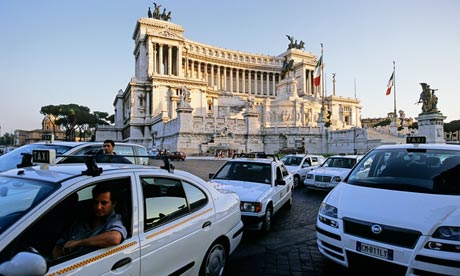
Taxi stand, National Monument Vittorio Emanuele II, Piazza Venezia, Rome, Lazio, Italy, Europe
A taxi stand in Rome’s Piazza Venezia. Photograph: imagebroker/Alamy
"Are you coming to Rome for a holiday?" the snowy-haired Italian sitting next to me on the plane asked.
"Actually, no," I said. "I'm coming to write about taxi drivers. And their favourite places to eat."
The man, an engineer and hobby archaeologist who was born and raised in Rome, slapped his hand to his forehead. "Our taxi drivers," he shook his head, "are terribili!"
He was not the first person to warn me about taxi drivers in Rome. Year after year, they are voted among the worst in the world. According to a 2011 EuroTest report by 22 European automobile clubs, "Rome's taxi drivers are aggressive, do not respect speed limits and traffic lights, and take long detours off the requested route."
In other words, if there was any city where taxi drivers were going to take me for a ride, it was Rome. But however naive it might have sounded to the Roman I met on the plane, I believed that some of the capital's 8,000 tassisti would show me where to find good things to eat in their city.
I based this belief on a steak. Five years ago I decided to climb into a random cab in Buenos Aires and ask the driver to take me to his favourite restaurant. After the taxista delivered me to a transcendent bife de lomo at a side-street steakhouse called Parrilla Peña, I started hopping into cabs in Buenos Aires, Berlin and New York, asking drivers where to eat and documenting my discoveries on a blog called taxigourmet.com.
In New York, I met two female cab drivers who showed me the way to Jamaican curried goat and Puerto Rican mofongo – and convinced me that I could drive a yellow taxi, too, which I did, for a year, chauffeuring everyone from hysterical brides to ex-New Yorkers searching for pastrami.
No one, my colleagues taught me, knows a city better than a cabbie. And four trips to Italy had taught me that few people know food better than Italians. What would happen if I tested these two truths in Rome – a city with some of the greatest food, and some of the most notorious taxi drivers, in the world?
"Buona sera," I said to the tassista who was parked, along with six of his colleagues, next to the Esso station on Piazza Albania. He winced at my accent and started rolling a cigarette.
"I'm looking for a cheap restaurant not too far from here," I continued.
"I never eat at restaurants around here," he said.
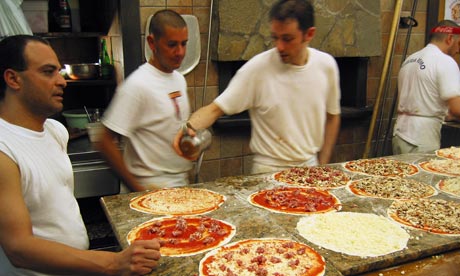
The trio of 'pizzaioli' at Pizzeria Remo 
The trio of 'pizzaioli' at Pizzeria Remo. Photograph: Alamy A tassista in a brown T-shirt with an opera singer's belly stepped out of his cab. "Go to Testaccio," he said. "There are lots of restaurants there. You'll find something."
"No, no," I said. "I'm a taxi driver, too. I want to go somewhere you would eat."
"Somewhere I would eat?" the cigarette-rolling cabbie said. He looked at the chubby tassista. They started laughing.
"Hey!" said the chubby tassista. "What about Remo?"
"Si!" said the cigarette-rolling cabbie. "Remo! They have good pizza."
"Can you take me there?" I said.
"You don't need us to take you!" said the cigarette-rolling cabbie. "Turn right at the signal, then left, then right. It's on Piazza di Santa Maria Liberatrice. There's a pharmacy across the street."
I'd already started to question the stereotypes about Roman cabbies on the walk to Pizzeria Remo and one glance at the Italian families celebrating on Tuesday night at the restaurant's pavement tables and one bite of pizza bianca con fiori di zucca – with olive oil, mozzarella, courgette flowers and a sprinkling of anchovies – moved me to outright optimism. True to Roman tradition, the toppings were spare but fresh, and the crust, thinner than the plate, charred on the edges, chewy but soft, was the masterwork of a trio of bandana-wearing pizzaioli who manned the wood-burning oven next to the entrance of the restaurant. The tassisti could easily have driven me in circles before dropping me off here, I thought, but they didn't.
Layne Mosler in her cab in New York. Photograph: Rumen Milkow
Were the tassisti at Piazza Albania the exception rather than the rule? The next day I walked to the taxi stand at Piazza Bologna, 4km north-east of the city centre, to find out. Rossella Falasca was driving the cab at the front of the queue. "You won't find Roman food in this neighbourhood," said Falasca, who has been driving for nine years and is one of approximately 1,200 female cabbies in Rome. "You have to go to Testaccio or Trastevere. But that way," she pointed to Via Sambucuccio d'Alando, "is a good seafood restaurant. I went there a few days ago."
Marco Magliozzi, the owner of La Fraschetta del Pesce, was amused that a tassista had sent me to his restaurant. "Our pasta boiler is broken," said Magliozzi, who worked as a fisherman and owned three fish stores before he opened La Fraschetta this March. "But we can do some antipasti, maybe a fritto misto for you." What followed – calamari with olive oil and lemon, mussels steamed with garlic, leeks and Castelli Romani white wine, grilled sea bass, crab and shrimp – were glorious expressions of what Magliozzi calls cucina alla marinara: simple dishes designed to showcase the quality of "our seafood".
After I met Simone Bellini, my rising faith in the food knowledge of Roman cab drivers reached fever pitch. The tassista led me to fantastic versions of rigatoni alla carbonara and trippa alla Romana at La Tavernaccia da Bruno – a family-run trattoria a few blocks from where the cabbie grew up, near the train station in Trastevere. He also insisted I try La Nuova Cantinetta, an archetypal Roman trattoria in Garbatella where he eats rigatoni alla pajata (with tomato sauce, milk-fed calf intestines and pecorino Romano) every week.
Reality hit after I took the underground to Cinecittà, the film studio where Federico Fellini made La Dolce Vita. There, on the outskirts of Rome, I hoped to find a tassista who could show me a restaurant that wasn't in a guidebook. Instead I met a cabbie who told me about a "terrible" taxi driver in Bangkok who cheated him, as he took the long way to the centro storico before delivering me to a restaurant where he tried to negotiate a kickback from the hostess in exchange for bringing me there.
Cinzia Perroni, a professional soprano who has been moonlighting as a tassista for five years, tried to explain the behaviour of her unscrupulous colleagues. "Before, some Roman cab drivers were dishonest because they were stupid," she said. "Now it's out of necessity. There are too many taxis and not enough passengers. But there's something really weird and really fun about this job. And I love to eat!" She wrote down the addresses of seven of her favourite restaurants, including Il Tunnel, where she's been eating risotto alla crema di scampi since she was a girl. "It's the best in Rome," she told me.
I didn't actively seek out female cab drivers in Rome – but they seemed to have the most interesting stories and the best food recommendations. Tassista Laura Piccolo, who studied mathematics before she started the job 12 years ago, was, I thought, a case in point. But as we searched for a trattoria she wanted to show me, she circled the same block three times – and left the meter running. When she found the place, it was closed. Was the cabbie trying to cheat me?
In the end we stopped at Perilli, Piccolo's favourite place for rigatoni alla carbonara. It said €18 on the meter, but she wouldn't take more than 12. "I got lost, honey. You don't have to pay for that!" She handed me her card: "Call me later and tell me if you liked the carbonara."
Layne Mosler is the author of the Taxi Gourmet blog (taxigourmet.com)

Six of the best cabbie-recommended restaurants in Rome

Giuseppe Ruzzeto, chef at La Tavernaccia da Bruno 
Giuseppe Ruzzeto, chef at La Tavernaccia da Bruno. Photograph: Rumen Milkow Pizzeria Remo
A 75-year-old pizzeria considered among the best in Rome, where locals get loud and every pizza is baked to order. Pizza bianca con fiori di zucca (€7.50) is especially good.
• Piazza di Santa Maria Liberatrice, 44, Testaccio (0039 6 574 6270), dinner only. Closed Sun
La Fraschetta del Pesce
A new restaurant where ex-fisherman Marco Magliozzi applies a light touch to the seafood his son delivers daily from their home port of Anzio. The Wednesday €13 crudo and pasta special is great value, but the €20, €30 or €40 menus give a taste of his way with fish.
• Via E d'Arborea, 40-42, Nomentano (0039 6 4424 4818; lafraschettadelpesce.it), lunch and dinner. Closed Mon
La Tavernaccia da Bruno
Sisters Paula and Patrizia Persiani took over this trattoria from their parents in 1991. Chef Giuseppe Ruzzeto (Patrizia's husband) frequently leaves the kitchen to take compliments on his rigatoni alla carbonara (€9) and trippa alla romana (tripe in a delicate tomato sauce, €12).
• Via Panfilo Castaldi, 12, Trastevere (0039 6 581 2792; latavernacciaroma.com), lunch and dinner. Closed Wed
La Nuova Cantinetta
A definitive Roman trattoria nestled between two apartment buildings in the Rococo-inspired Garbatella quarter. Owner Paolo Sanna keeps prices low and tassisti coming back for classics such as rigatoni alla pajata (€6).
• Via Basilio Brollo, 7, Garbatella (0039 6 513 5809), lunch and dinner. Closed Sun
Il Tunnel
Seafood dishes here – such as tassista Cinzia Perroni's favourite risotto alla crema di scampi (€7) – are solid and reasonably priced, but it is their affogato (home-made custard ice cream drizzled with espresso, €6) that merits a cross-town cab ride.
• Via Arezzo, 11, Nomentano (0039 6 4423 6808), lunch and dinner. Closed Mon
Perilli
A favourite of former New York Times restaurant critic Frank Bruni and taxi driver Laura Piccolo, where rigatoni alla carbonara (€13) and abbacchio (Roman spring lamb, €14) are a bit pricey but pitch-perfect.
• Via Marmorata, 39, Testaccio (0039 6 574 2415), lunch and dinner. Closed Wed

Monday, September 30, 2013

20 must do in Rome

 
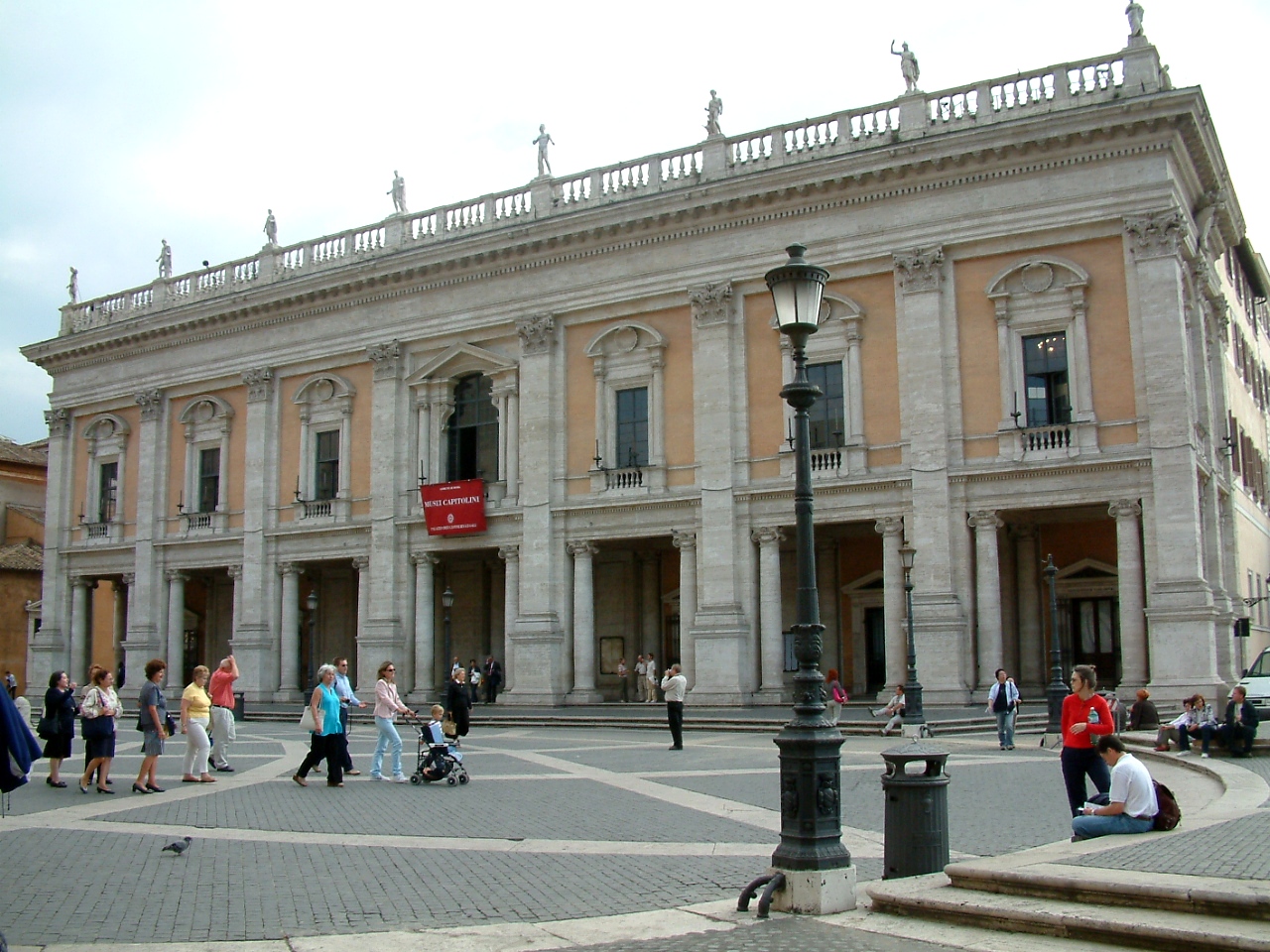
Musei Capitolini -Piazza del Campidoglio 1 - 00186 Roma
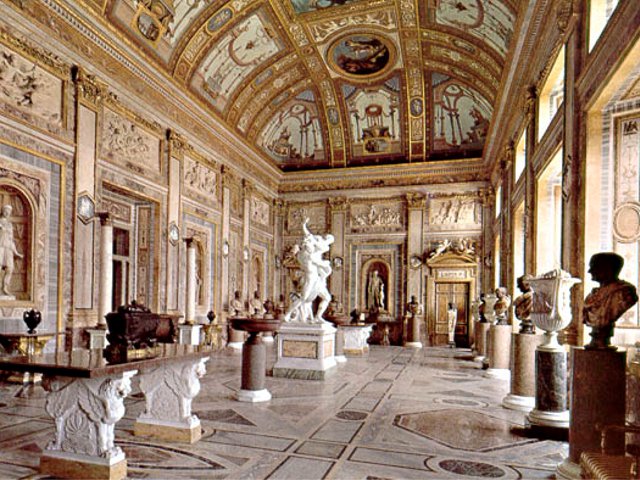
1. Greet the Old Masters of the Capitoline This is the city that has nurtured the art of Michelangelo. Housed in twin palaces on opposite sides of his piazza del Campidoglio are the Capitoline Museums. They constitute the oldest public gallery in the world, having opened their collection to the public in 1734. Once inside, you can admire breathtaking paintings by Titian, Tintoretto, Veronese and Caravaggio, and beautifully crafted statues by the Baroque genius Bernini. While on the art trail, don't miss the Borghese Gallery and the Palazzo Barberini Galleria Nazionale d'Arte Antica.Getting there-Getting there (via ATAC Roma): -www.atac.roma.it-Mobile version: -www.muovi.roma.it
Opening hours-Tuesday-Sunday: 9.00 - 20.00;-Last admission 1 hour before closing time.The ticket office is situated on the Piazza del Campidoglio, on the ground floor of the Palazzo dei Conservatori.
Charges--"Museum + Exhibitions (Archimede. Arte e scienza dell’invenzione 31 May 2013-12 January 2014)" Combined Ticket: - Adults: € 13,00;
"Capitoline Museums + Centrale Montemartini + Exhibitions (Archimede. Arte e scienza dell’invenzione 31 May 2013-12 January 2014)" Combined Ticket (valid 7 days):-- Adults: € 15,00;.
PLEASE NOTE: (Italian and English) audio guides will be on sale during the exhibition period at a cost of € 6,00 for both the Capitoline Museums permanent collections and the exhibition.
In case of cultural events the price of the tickets may vary: future exhibitions
Booking: tel. +39 060608 (daily, 9:00 – 21:00).

Centrale Montemartini--Via Ostiense 106 - 00154 Roma
Getting there -Getting there (via ATAC Roma):-www.atac.roma.it
Mobile version: -www.muovi.roma.it
Opening hours-Tuesday-Sunday: 9.00 - 19.00-Last admission 1/2 hour before closing time.
Situated on Via Ostiense on the left bank of the Tiber, opposite the former General markets, the Montemartini Power Plant is an extraordinary example of an industrial building transformed into an exhibition space.It was originally the first public electricity plant in Rome, named after Giovanni Montemartini; now it is the second exhibition centre of the Capitoline Museums, and contains an outstanding collection of classical sculpture from the excavations carried out in Rome at the end of the nineteenth century and during the first decades of the twentieth.The display reconstructs the monumental complexes of antiquity, tracing the development of the city from the Republic to the Late Empire. It includes works of great significance, often almost unknown to the general public, such as the huge mosaic of hunting scenes from Saint Bibiana.
The vast rooms inside the building, in particular the Hall of the Machines with its fine Liberty style furnishings, preserve turbines, diesel engines and colossal steam boilers from the power plant unaltered. This striking backdrop accentuates the translucent clarity and delicate sculpting of the antique marble.
The masterpieces of ancient sculpture displayed here, such as the sculptural group from the Temple of Apollo Sosianus, the colossal acrolithic statue of the goddess of Fortune from the Largo Argentina, and the pensive figure of the muse Polimnia, are all the more remarkable against such an intriguing backdrop. The museum recalls simultaneously the monumental grandeur of ancient Rome and the memory of the more recent industrial past.


2. Connect with your inner gladiator at the Colosseum The Colosseum is a monument of epic proportions. Stories of gory battles between gladiators, slaves, prisoners and wild animals have emerged from this Flavian amphitheatre, which dates from AD 72. A vast arena of entertainment, with a seating capacity of over 50,000 people, it could fill up in 10 minutes. Nowhere in the world was there a larger or more glorious setting for mass slaughter. Today, the only gladiators that you will see are the ones parked outside for the tourist shutterbugs. But this is a necessary pilgrimage for history buffs, and the ideal starting point from which to take in the Roman remains of the city: the jaw-dropping Forum, the Domus Aurea and the Pantheon.
The Roman Coliseum is located in the heart of piazza del Colosseo, on the homonymous B(blue) metro line.Colosseum admission fee: -Full ticket - €15.50
Opening hours:
Mid February - mid March: 9 AM - 4.30 PM
Mid March - end March: 9 AM - 5.00 PM
End March - end August: 9 AM - 7.00 PM
End August - end Sept.: 9 AM - 6.30 PM
End Sept. - end October: 9 AM - 6.00 PM
End October - mid March: 9 AM - 4.00 PM

 3. Stroll through the Gardens of the Villa Borghese Like any other capital city, Rome can be overwhelming. When the Colosseum starts to weigh down on you, find serenity in the gardens of the Villa Borghese, the city's most central public park. It's popular with joggers, dog-walkers and pleasure seekers. In recent years, it has grown a contemporary art museum in the Orangerie: the Museo Carlo Bilotti. To escape the crowds, climb the steep hill behind Trastevere and the Gianicolo, where you'll discover the green tree-filled expanse of the Villa Pamphili Park in the suburb of Monteverde. Children can feed turtles at the pond and ride ponies in the park, while you nap under a shaded tree before heading out to catch a glimpse of the Pope. See all parks and gardens


 4. Join an audience with the Pope at the Vatican If you met the Pope, what would you say? Well, you probably won't, but you can join an audience with him on Wednesday mornings. If the weather is fine, then he'll hold this general audience in St Peter's Square; otherwise it takes place in the Sala Nervi audience hall. Expect to join clusters of Catholic devotees, and flocks of camera-waving tourists. Afterwards, you can take the opportunity to wander through St Peter's Basilica, admire Michelangelo's stunning frescoes in the Sistine Chapel and visit the famous 'Belvedere Apollo' and 'Laocoön' at the Museo Pio-Clementino among the Vatican Museums. See all religious sites and buildings

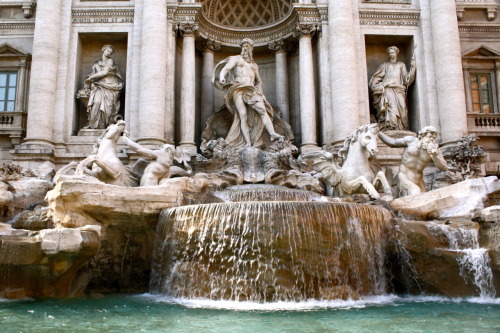
 5. Throw a coin into the Trevi Fountain These days the gorgeous Trevi Fountain is also a Red Cross piggy bank, thanks to all the loose change that tourists fling into the water as they make a wish. Tucked away in a tiny piazza and surrounded by jostling crowds, the fountains' creamy travertine gleams beneath torrents of water and camera flashes. It's a rococo extravaganza of rearing sea horses, conch-blowing Tritons and craggy rocks, erupting in front of the Palazzo Poli. A stone's throw away sits La Città dell'Acqua, which incorporates the remains of an Imperial-age apartment building and a holding tank for the waters of the Acqua Vergine gushing underneath.
 6. Perfect your geometry at the Pantheon Appraise the architecture of ancient Rome with a trip to its best-preserved building: the Pantheon. Built by Hadrian around AD 119-128, it was originally a temple to the classical deities and remains a church today, holding the tombs of the united Italy's first king and the artist Raphael. The exterior still retains its original bronze doors, and inside the dimensions follow the rules set down by top Roman architect Vitruvius. The diameter of the hemispherical dome is exactly equal to the height of the whole building, giving it the capacity to hold a perfect sphere. See all historic sites and buildings
 7. Scope out delightful ice cream at San Crispino There's so much ice cream on every street that scoping out a unique gelato experience is quite the challenge. But you'll find what many consider to be the best ice cream in the city at Il Gelato di San Crispino. The secret is the makers' obsessive control over the whole process. The flavours change as the seasons shift – try the summer-time lampone (raspberry) and suisine (yellow plum). Only tubs are allowed because cones interfere with the wonderful flavours. See all gelaterie

 8. Photograph the city's best piazzas For a snapshot of Rome's artistic heritage, visit its exquisite squares. At the Piazza del Popolo, you can follow Grand Tourists of the 18th century, who would have caught their first glimpse of the city through its most northern gate, at the end of the ancient via Flaminia. Designed in the shape of an oval by Rome's leading neo-classical architect Giuseppe Valadier in the 19th century, its focal points are the church of Santa Maria del Popolo, with a chapel by Raphael, and an Egyptian obelisk, brought to Rome by the emperor Augustus. The Piazza Navona, on the other hand, is a theatrical space, which is home to the works of great Baroque masters: the church of Sant'Agnese in Agone by Borromini and the Fountain of the Four Rivers by Bernini. See all squares

 9. Scale new heights to see spectacular views If looking up at historic buildings is straining your neck, then how about gazing down at some views instead? The Vittoriano, a huge white monument to united Italy, may obscure sights on the ground, but has a lift that will zip you up to its terraces in a matter of moments to enjoy a bird's eye view. If you're a stickler for tradition, then climb the 320 steps to the top of the dome of St Peter's Basilica. It will offer you a breath of fresh air after marvelling at the magnificent frescos.


 10. Glam up for a night at the Opera A night at the opera can be an inspiring experience and a great opportunity to wear your elegant gloves. The grey, angular Mussolini-era facade of the Teatro dell-Opera di Roma-Teatro Costanzi gives way to a beautiful and harmonious interior with a good-sized stage. Here you'll find towering rows of boxes, and loads of stucco, frescoes and intricate gilding all around. For the best acoustics, splurge on a box - it's all part of the experience.

 11. Follow the legend of the wolf Throughout Rome's history, anyone aspiring to power needed a legend to lend legitimacy to their rule. And you can find the relics of one story at the Lupercal - a cave discovered by the first Roman emperor Augustus beneath his home at The Palatine. Here, the she-wolf nursed the twin brothers Remus and Romulus after they were found in a basket by the Tiber. Legend had it that the lucky Romulus climbed this hill to found the city, so the emperor decorated the cave to charm the populous. Yet the monument was consumed by the ravages of time, and only came to light again in 2008. It was 'rediscovered' by the then culture minister Francesco Rutelli of the
Democratic Party at the moment that the restored House of Augustus opened to the public. But this time around, the legend-based magic didn't work. Rutelli lost his bid to become mayor and the Democrats were beaten in the general elections.
12. Tease your tastebuds at Il Pigneto In the last couple of years Il Pigneto, just east of Porta Maggiore, has achieved that critical mass of bars and restaurants that turns a below-the-radar district hip. It's a mix of houses and low-rise 1960s condominiums, whose proximity to the San Lorenzo stockyards meant that the area suffered heavy wartime bombing. But the anarchic, bohemian feel of the place attracted arty types such as Pier Paolo Pasolini, who shot his first film here. Check out cool bars like Pigneto 41 on the central thoroughfare via del Pigneto, the slow-food inspired restaurant Primo (via del Pigneto 46, 06 701 3827, www.primoalpigneto.it); the book-lined wine bar Il Tiaso (via Perugia 20, 333 284 5283); and the shabby-chic hangout Bar Necci (via Fanfulla da Lodi 68, 06 9760 1552, www.necci1924.com).
13. Grab a slice of authentic pizza In Rome, cheesy stuffed crust pizzas would be a cultural sacrilege. Here, authentic pizzas are made with freshly tossed thin crusts in wood-fired ovens. To experience the authentic Pizza Romana, visit the Testaccio institution of Remo. To sample crunchy, gourmet Roman pizzas over dinner with a glass of wine in a rustic restaurant, try La Gatta Mangiona in Monteverde. But if you're after a quick takeaway, then stop by the newly opened Bir and Fud, where
pizzas made with organic flour and experimental toppings are served with mugs of lager.
14. Have a glass of white Frascati If you're a wine buff, then visit Al Vino Al Vino, a friendly hostelry with a range of over 500 wines. Its real specialty is the distillati: fine grappas, whiskies and other strong spirits. There's Sicilian-inspired food to soak it all up. Apart from this, enoteche (wine shops) can be found on almost every street in the city. We recommend visiting the painters' haunt Antica Enoteca di Via della Croce and the cosy wine bar of Il Goccetto.
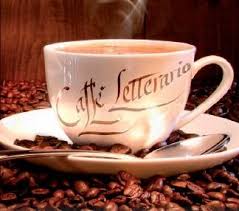
15. Discover geek chic at a book bar Italians are not big readers, but they've taken to nights out in book bars, where they drink, have fun and discuss literature. Caffè Letterario led the charge in a part of the city bustling with Terza Università students. The move came on the crest of a cultural wave accompanying the transformation of peripheral Mattatoio into an area of cutting-edge cool. Bohemian Trastevere, just across the river, boasts the highest concentration of book bars, the largest of which is Bibli, where readers can mingle with artists and authors over a glass of wine.
 
16. Browse in the boutiques If you don't fancy wearing a toga and tie-up boots like the Romans did, then you can go shopping in plenty of boutiques that sell modern clothes for all tastes. You'll find many of the best of Rome's independent designers in a cluster of boutiques: the Arsenale is the perfect place to find Bohemian chic, Le Gallinelle stocks reworked vintage threads and Le Tartarughe cultivates classic easy-to-wear clothes with a twist.
17. Amble around antique markets Are you after an antique souvenir? Among the best places to go shopping are via del Babuino, via Giulia and via de' Coronari; the latter stages antique fairs in May and October. Occasional bargains can be picked up at flea markets: the Porta Portese sells bootleg CDs, furniture, clothes and fake designer gear, while the Via Sannio is piled high with vintage articles of clothing. Make sure that you watch out for pickpockets.


18. Catch glimpses of Napoleon Blink and you could miss any mention of Napoleon's reign in Rome, which lasted from 1798 to 1814. Dreams of empire were his fantasy; he even shipped in Pope Pius VII for his imperial coronation in Paris in 1804. Rome became a means of amassing wealth: he instructed his army to haul back cartloads of marbles and Old Masters. But his mother lived happily on the Piazza Venezia for years. The Museo Napoleonico contains pieces relating to the imperious Frenchman's family.


 19. Indulge in sweet treats Chocolate is one of Rome's sinful indulgences and you'll find exquisite chocolate shops and cafés in this pantheon of gastronomic delights. Cioccolata e Vino hedges its bets with a double temptation. Half shop, half bar, this chocolate-box-sized Trastevere is full of treats, from decadent hot chocolate to handmade sweets. Pop into Da leccarsi i baffi (via del Panico 31, 06 9799 7935) for bites of cherry-filled chocolate cases, topped with warm melted chocolate and stop at Moriondo & Gariglio for freshly wrapped candy. For a genuine Italian coffee, visit the famous Sant' Eustachio, whose walls are pasted with celebrity testimonials. The coffee is fantastic; try the gran caffè, which is served frothy and sweet.
 

 20. Stay up for a late drink Is it one in the morning and you don't feel like going home? No problem. Head to Etabli (Vicolo delle Vacche 9, 06 687 1499, www.etabli.it), where bright young things enjoy drinking in a cosy environment with chandeliers and armchairs set around the fireplace. If you fancy some glamorous dining and drinking, step into the designer interior of Crudo. Among its attractions are installations, plasma screens and DJS. Meanwhile, the Friends Art Café takes care of all your food needs, from breakfast to after-dinner cocktails. The chrome detailing and brightly coloured plastic chairs plus fashion TV lend a retro-'80s funhouse feel. You might feel like moving in.

Museum and Crypt of Capuchins

Via Vittorio Veneto 27 | Chiesa dell'Immacolata Concezione della Beata Vergine Maria, 00187 Rome, Italy We stumbled upon this hidden gem on our last day in Rome, and we were very glad we did! Be warned that shoulders must be covered and shorts must be around Bermuda length. Mine were a bit too short at first, but after unrolling the cuff and adding an inch or so I was told I was good too go. If you aren't covered properly they will let you borrow a shawl or long button up shirt to cover with.
The self guided tour begins by winding through a museum that tells about the dress of the Capuchin order and chronicles the lives and histories of the friars. I can definitely see how some people would find it a bit dull, but as I had a mild interest in the topic I thought it was compelling and well done. The finale of the tour is a walk through the crypt. Though small, it is very riveting. There are six or so rooms off of the hall that you walk down filled with skeletons of friars arranged in very artsy tableaus. Even the chandeliers and decor on the ceiling and walls are made of bones- very eerie in a beautiful way. The music that they play really adds to the atmosphere too. What ruined it a bit was a group of rambuncious kids yapping away loudly who had to be reprimanded by the staff, but they soon calmed down. I wish I had been allowed to photograph it, but they do sell postcards in the gift shop for just 1 Euro each.

If you have an interest in the subject, this is definitely worth your time and money. Even if you didn't really have prior interest, you will probably still find the crypt truly unique. The Museum and Crypt of Capuchins was in several guidebooks we consulted for engaging older children/ teenagers in Rome. The Museum is located on via Veneto, just north of the Piazza Barberini, on the right side of the street. You walk up a double set of stairs. Hours are daily 9 AM to 7 PM. Shoulders and knees must be covered when you enter. The Tripadvisor city app does not accurately take you to the museum; it is actually 100 yards south of where it tells you to go.
Those unfamiliar with the Capuchin order may recognize the robes of St. Francis as its popular representation. The order values above all the Christian principles of service (especially to the needy and poor) and humility. The museum, though small, is an excellent education to the order, showing some of the history and artifacts. These include fascinating objects like the hair shirts and self-flagellation devices used by the priests to remind them of the suffering of Christ, as well as diaries, and toys (like dolls) made to resemble Christ to distribute to children. Some of these artifacts are several centuries old. Although the entrance fee of 6 Euros may seem higher than other popular tourist attractions, I guess I feel it to be worthwhile, knowing that the money will go toward projects that benefit the charities supported by the order. I know that the Jesuits and Cappuchins are doing some of the most important charity work throughout the developing world.
Finally, the crypts are several rooms (six, I think) decorated with the bones of thousands of monks. One walks through them sequentially. Presumably consent was given to use the deceased's bones (the friars died between 1528 and 1870). The bones are used to create decorative patterns: crosses are made from femurs, lighting fixtures from scapulae, flowers from iliac crests. Several monks lie resting on sarcophagi in repose, their skin mummified, not alive but not quite decomposed. There are chandeliers above the visitor's heads made from ribs and skulls. These are more fanciful and artistic depictions than the catacombs of Paris, for instance. But in this way, it also feels more morbid. Photography is not allowed, but there are postcards for sale in the little gift shop.
Please be respectful to the life and work of these priests by using a quiet voice when visiting, and refraining from photography.

Mouth of Truth

 Mouth of Truth -Bocca della Verità
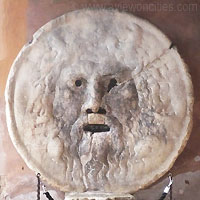
The Mouth of Truth (Bocca della Verità in Italian) is an ancient Roman marble disc with a relief carving of a man's face. According to legend the face's mouth closes if a liar sticks his hand in it.
 
The massive marble mask weighs about 1300 kg and probably depicts the face of the sea god Oceanus. The eyes, nostrils and mouth are open.
Origin -Historians aren't quite certain what the original purpose of the disc was. It was possibly used as a drain cover in the nearby Temple of Hercules Invictus, which had an oculus - a round open space in the middle of the roof, similar to that of the Pantheon. It is also thought that cattle merchants used it to drain the blood of cattle sacrificed to the god Hercules.
In the 13th century the Bocca was probably removed from the temple and placed against the wall of the Santa Maria in Cosmedin. In the 17th century it eventually moved to its current location inside the portico of the church.
The Legend of the Mouth of Truth -Try it out!
The marble disc is now famous for the medieval legend that is associated with it. People believed that the mouth of the marble face would close if anyone put his hand in it and told a lie.
Those who were accused of committing perjury or adultery were brought here. They had to swear under oath and then put their hand into the mouth. According to the legend it was even used during the Middle Ages as a trial by ordeal. An executioner would hide behind the disc with a sharp sword ready to strike.
The legend became a popular part of culture and even today parents threaten fibbing children with a visit to the Mouth of Truth. In the 19th century the Italian writer Gioacchino Belli wrote a poem about the legend and the Mouth of Truth even entered American culture when it featured in the 1953 movie 'Roman Holiday'.
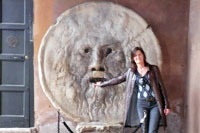
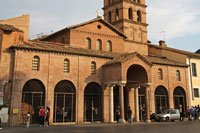
Santa Maria in Cosmedin -Location -The Mouth of Truth stands against the left wall of the portico of the Santa Maria in Cosmedin church, at the piazza della Bocca della Verità, the site of the ancient Forum Boarium. It attracts plenty of visitors who audaciously stick their hand in the mouth.

Eating in Trastevere, Avoiding Tourist Traps.

Eating in Trastevere, Avoiding Tourist Traps. Some Good Restaurant Tips
January 7, 2011 BuzzInRome Ice Cream, Italian Cuisine, Pizza, Roman Cuisine, 3
5


Anybody heading to Rome has to visitTrastevere, the place where the Romans go to eat, people watch and enjoy ice cream.
Below are eight places that I would recommend – You can book a table in some whereas for others you will have to wait in line … remember the best place often have queues.
Ai Fienaroli
7, via dei Fienaroli, +3906 583 347 51
A very nice restaurant with a medium priced menu, they have very friendly staff who even coped well when I took a group of 14 drunken English and Irish people just before my wedding. I have eaten here more than five times would recommend visiting especially for the wonderful antipasto misto.
Popi Popi 
Via delle Fratte di Trastevere 45, +3906 58 95 167
An excellent option for people with a lower budget, you can get decent antipasta and very good pastas at affordable rates. It is a large restaurant where you can often get a seat especially before 8pm. The staff are very friendly and happy to speak English or Italian to their customers.
Ivo A Trastevere
158, Via di San Francesco a Ripa, +3906 58 170 82
I class this as the best pizza restaurant in Trastevere, they serve an incredible range of pizzas. My friend even had a brie and salmon one which she said was delicious. This place really is pizza heaven, the only problem is trying to decide which one to have.
Trattoria Da Lucia
2, Vicolo del Mattonato, +3906 58 036 01
My favourite restaurant in Rome, it is owned by a famous ex-boxer and family run. There are pictures are up on the wall of the owners boxing past. A very traditional place to eat, in the summer you can sit outside. This is always our choice for our first and last meal when we visit Rome, two excellent pasta dishes are “Cacio e Pepe and Penne Alla Grecia”.
Da Giovanni
41a, Via Della Lungara
This restaurant is on the outskirts of Trastevere, a bottle of house wine is only six Euro and very good. If you try this place out, be sure to get there early as it fills up quickly. It is a very simple restaurant, the waiter has perfect English if you cannot speak Italian. As the night goes the menu gets smaller and smaller as the food runs out.
Isole di Sicilia
68/69 Via Garibaldi, +3906 58 334 212
An excellent Sicilian restaurant where the portions are huge, it is a little more expensive than most restaurants in the area but is well worth it. Having visited Sicily, we thought we would give it a go and were very impressed. The fish and Nero d’Avola were excellent, it gets very busy and would be worth booking a table to avoid disappointment.
Antica Pesa
18, Via Garibaldi, +39065809236
This restaurant is high end, and you have to book to have any chance of getting a table. The menu boasts a wide range of dishes that you are unlikely to find anywhere else in Trastevere. The décor is very impressive and if you are there in summer make sure you reserve a table in the wonderful garden.
Fior Di Luna
Via Della Lungaretta
No list would be complete without recommending a gelateria, in the main square you will find Blue Ice which is part of a chain. Personally I would go back towards Viale Trastevere and on your left you will see Fior Di Luna – They sell the most amazing organic ice cream.

Tivoli's Roman Villas

Tivoli's Roman Villas
 
Hadrian's Villa — complete with copies of his favorite buildings from around the world — was a modern-day Vegas, sans Siegfried and Roy.
By Rick Steves and Gene Openshaw
At the edge of the Sabine Hills, 18 miles east of Rome, sits the medieval hill town of Tivoli, a popular retreat since ancient times. Today it's famous for two very different villas: Hadrian's Villa (the emperor's Versailles-like place of government, which enabled him to rule from outside but still near the capital city), and the recently restored Villa d'Este (the lush and watery 16th-century residence of a cardinal in exile).
Hadrian's Villa
Hadrian's Villa was built at the peak of the Roman empire. The emperor Hadrian, who ruled from A.D. 117 to 138, sought refuge here from the political complexity of court life in Rome. The Spanish-born Hadrian was an architect, lover of Greek culture (nicknamed "the Little Greek"), and great traveler.
Hadrian visited every corner of the vast empire, from Britain (where he built Hadrian's Wall), to Egypt (where he sailed the Nile), to Jerusalem (where he suppressed a Jewish revolt), and to Athens (where he played backgammon). He beautified Rome with the enduring Pantheon, his tomb (Castel Sant' Angelo), and this villa, a park filled with copies of his favorite buildings from around the world (similar to today's Legoland, Disneyworld, and Las Vegas).
Hadrian's was the largest and richest Roman villa anywhere. He spent his last 10 years on this estate, enjoying its 300-plus, evocative acres.
As a visitor, you're more likely to feel like a Roman soldier than an emperor or nobleman: To explore the villa, be ready for a long march in the heat — lots of walking is unavoidable.
Start your visit at the plastic model of the villa for an orientation. Be sure to tour Teatro Marittimo, the circular palace that was Hadrian's favorite retreat, and the Egyptian Canopus, a sanctuary of the god Serapis, with its statue-lined canal.
Regrettably, this "Versailles of Ancient Rome" was plundered by barbarians. The marble was burned to make lime for cement. The art was scavenged and wound up in museums throughout Europe. Visitors have to piece together the majesty from the parts that remain.
Villa d'Este
Ippolito d'Este's grandfather, Alexander VI, was the pope...probably the only reason Ippolito became a cardinal. Ippolito's claim to fame: his pleasure palace at Tivoli. In the 1550s, Ippolito destroyed a Benedictine monastery to build this fanciful, late-Renaissance palace. Like Hadrian's Villa, it's a large residential villa. But this one features hundreds of Baroque fountains, all gravity-powered. The Aniene River, frazzled into countless threads, weaves its way entertainingly through the villa. At the bottom of the garden, the exhausted little streams once again team up to make a sizable river.
The cardinal had a political falling-out with Rome and was exiled. With this watery wonderland on a cool hill with fine views, he made sure Romans would come to visit. It's symbolic of the luxury and secular interests of the cardinal.
After years of disuse, the villa has been completely restored. All the most eye-popping fountains have been put back in operation, and — with the exception of the two highest jets of the central fountain, which are electric-powered — everything still operates on natural hydraulics. A new terrace restaurant has been installed on the highest level of the garden, opportunely placed to catch cool afternoon sea breezes coming in across the plain of Rome. Expect lots of stairs.
Getting to Tivoli
The town of Tivoli, with Villa d'Este in its center, is about 2.5 miles from Hadrian's Villa ("Villa Adriana" in Italian).
Reaching the town of Tivoli is easy, and Villa d'Este is in the town center. Getting to Hadrian's Villa is complicated and time-consuming — you'll go into Tivoli and backtrack on another bus — but many find it well worth the trouble.
From Rome, take a Metro/bus combination. Ride Metro line B to Ponte Mammolo, and then take the local blue Cotral bus to Tivoli (3/hour, direction: Tivoli).
For Villa d'Este, get off in downtown Tivoli, near the central square and the big park with amusements. Cross the road and follow signs (for about a block) that lead to the villa.
To get to Hadrian's Villa from downtown Tivoli, catch orange city bus #4X. Buy your ticket at a nearby tabacchi shop. When you're ready to leave Hadrian's Villa to go back to Tivoli, catch bus #4 or #4X in the direction of Tivoli. If you're continuing on to Rome, get off at the main road and change to a Cotral bus (ask the bus driver for help — he knows what you need to do). Departures after 16:30 can be sparse.
When day-tripping, remember that Hadrian's Villa is open daily, but the Villa d'Este is closed on Mondays.